Third in a series, “Rejecting the Politics of Division and Embracing Unity”
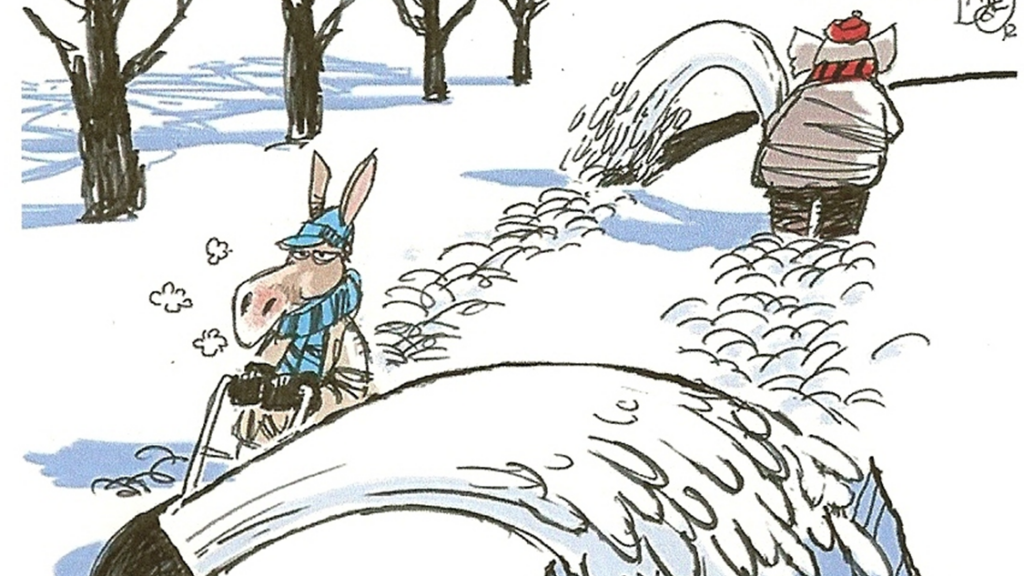
Most of us are generally aware of the constant fighting between America’s political parties. Republicans and Democrats are locked in an ongoing battle for control. The victorious party imposes its policies and wipes out the gains of the vanquished party. Eventually, the vanquished becomes the victor and the process reverses itself. Along the way, success by one party is viewed as a loss by the other. In American politics, the opposing party is always to blame and never does anything right.
Despite this general awareness, few Americans appreciate how dysfunctional this back and forth fighting is. Yes, polling says we’d like to see members of both parties working to solve problems instead of battling. But, no, we don’t understand the extent to which this wrangling has prevented the country from making real and durable progress on many of its problems.
In this post my aim is to expose the dysfunctionality of back and forth fighting by looking at history. Going back almost two decades, I’ll start with President Obama (2009-2016). I’ll summarize what he and Democrats did to both enact their policies and undo policies adopted by President George W. Bush and Republicans. I’ll also address what Republicans did during Obama’s two terms to block, stall or undo his policies. I’ll then move in a similar manner to cover President Trump (first term), President Biden, and President Trump (second term).
By revealing the details of all this back and forth fighting, we’ll see that it leads nowhere. This “erase and replace policymaking” alternately takes the country in opposing directions instead of a unified and long-term direction. And we, the voters, are also the losers when it comes to the particular issues and policies we care about. Depending on who is in control, we find ourselves elated and depressed as we see our favored policy solutions ebb and flow in successive regimes. And, more important, when we turn our attention to the country’s problems, as opposed to this dysfunctional pattern of erase and replace policy solutions, we come face to face with a disheartening lack of progress.
So, let’s start our journey, going back to when Barack Obama and Democrats swept into power with the 2008 election.
Here’s what President Obama and Democrats did during Obama’s two terms (2009-2016) to enact their policies and halt or reverse policies put in place by President George W. Bush and Republicans.
While President Bush and Republicans favored tax cuts, defense spending, and reducing entitlement program growth, President Obama and the Democrats prioritized economic stimulus, renewable energy, healthcare expansion, and middle-class tax relief. Bipartisanship was a key component of Obama’s political vision, and throughout his campaign in 2008 he committed to work with Republicans to enact policies that could improve the lives of all Americans. Here are some, but not all, of the major policy shifts:
- On the economic front, Obama and the Democrats enacted The Dodd-Frank Wall Street Reform and Consumer Protection Act (2010) to restructure the US financial system in response to the 2008 economic crisis. This legislation overhauled and undid the deregulation approach favored by the Bush administration. Voting for the bill fell heavily along partisan lines.
- On the environmental front, Obama reversed the Bush-era refusal to regulate carbon emissions by issuing his Climate Action Plan. Obama also vetoed legislation authorizing the construction of the Keystone XL pipeline. This reversed Bush’s approach of promoting major fossil fuel projects. Numerous court challenges were also initiated by Democrats and interest groups to challenge Bush Administration rollbacks of protections under the Clean Air Act, Clean Water Act, and the Endangered Species Act. Finally, in August of 2016, Obama formally joined the Paris Agreement to reduce global greenhouse gas emissions. He did so via a non-legally binding political commitment rather than a treaty, which would have required ratification by the Senate.
- On the healthcare front, Obama and the Democrats adopted The Affordable Care Act (2010) implementing major healthcare reforms that reversed the market-led policies of the Bush administration. They also expanded the Children’s Health Insurance Program (CHIP), which Bush had previously vetoed.
- On the immigration front, Obama ended Bush-era immigration practices that focused on large-scale worksite raids. Instead, Obama instituted a policy of “prosecutorial discretion” that prioritized arresting and deporting those with criminal backgrounds and those who presented a threat to national security. He also adopted executive orders that protected young undocumented immigrants (DACA) and their parents (DAPA) from deportation. On the other hand, Obama left in place and expanded Bush’s Secure Communities program that mandated local police cooperation. Overall, Obama’s policies yielded record deportation numbers.
- On the education front, Obama and the Democrats moved to phase out and ultimately replace the No Child Left Behind Act, which was the heart of Bush’s education policy. Interestingly, Obama’s Every Student Succeeds Act was a bipartisan effort that overwhelmingly passed both the House and the Senate. The law reduced the federal role in education, returning many policies to state and local government.
- On the tax front, Obama and the Democrats worked with Republicans to enact the American Taxpayer Relief Act of 2012. This bill modified the Bush Administration’s major tax cuts enacted in 2001 and 2003. Tax cuts for wealthy Americans were allowed to expire, but almost all other tax cuts were extended. The bill received strong bipartisan support in the Senate and moderate bipartisan support in the House.
- On the foreign policy front, and to prevent Iran from acquiring nuclear weapons, Obama negotiated a six-country Joint Comprehensive Plan of Agreement (JCPOA). This “Iran Nuclear Deal” was a departure from Bush’s multi-part approach. Bush applied a combination of threats—US military action (including preemptive strikes), diplomatic isolation, and targeted financial sanctions—to pressure Iran into giving up its nuclear ambitions. Obama and Democrats supported the goal of preventing Iran from acquiring nuclear weapons but opposed the Bush administration’s ongoing threats of military action. With the JCPOA, Iran agreed to keep its uranium enrichment and nuclear fuels below specified levels, with ongoing monitoring and verification. In return, Iran received sanctions relief.
And here’s how Republicans opposed, blocked and thwarted many of Obama’s initiatives during his two terms (2009-2016).
After Obama took office, Republicans immediately signaled that they did not intend to work with the new president. “Block Obama at all costs,” and “No compromise” pledges were de rigueur. In October of 2010, Senate Minority Leader Mitch McConnell actually told the National Journal, “The single most important thing we want to achieve is for President Obama to be a one-term president.”
- Republicans used the filibuster (a Senate procedural rule) to prevent Obama from moving or passing legislation where he didn’t have at least 60 votes in the Senate. They also filibustered the confirmation of judicial and executive nominees. Their use of the filibuster set all-time records. However, by the time Obama came into office, it was common practice for the minority party to filibuster most legislation proposed by the majority. Republicans countered that Democrats had filibustered Bush and Republican proposals at record levels in prior years.
- Republicans did not contribute a single vote to the Affordable Care Act. Instead, their opposition to this legislation was the centerpiece of their 2010 November midterm campaign. In this election Republicans regained control of the House of Representatives, picking up a huge net gain of 63 seats.
- After, capturing control of the House, Republicans voted some 54 times to repeal, defund, or otherwise sabotage the Affordable Care Act. In 2015, they actually passed the Restoring Americans’ Healthcare Freedom Reconciliation Act, but Obama vetoed the bill.
- Republicans, including several Republican-controlled states, filed multiple lawsuits challenging the legality the Affordable Care Act, Obama’s executive actions on DACA and DAPA, and other of Obama’s actions. In terms of multistate lawsuits, the Obama administration was sued 78 times, as compared with the 76 multistate lawsuits brought against the Bush Administration. Republicans frequently criticized Obama’s “executive overreach,” saying he was trying to dictate laws instead of working with Congress.
- Republicans used the many failures of Obama and Democrats as a centerpiece for their 2014 midterm elections campaign. Republicans gained control of the Senate for the first time since 2006, shifting to a 54-44 majority (with two independents). In the House, Republicans increased their majority to 247 seats, while Democrats held 188.
- Republicans opposed Obama’s commitment to the Paris Agreement. They claimed it was an overreach of executive authority because Obama had bypassed Senate treaty approval. They argued that complying with the Paris Agreement would hurt the U.S. economy.
- On several occasions, Republicans used the debt ceiling as a high stakes leverage in negotiations with Obama and congressional Democrats. This exposed the country to the threat of default and a downgrading of its credit ratings and credit worthiness. And in 2013, Republicans shut down the federal government for two weeks in an attempt to block the Affordable Care Act.
- Republicans opposed Obama’s 2015 Iran nuclear deal (JCPOA), calling it a “threat to national security” and a “reward to a hostile regime.” They maintained the deal’s “sunset provisions” were too weak, it failed to address Iran’s ballistic missile program, and it failed to end support for terrorist groups.
- On immigration, a bipartisan group of Senators (“the Gang of Eight”) put together a comprehensive reform bill that toughened enforcement in return for a policy that would allow some of those living in the country illegally to stay for fixed periods of time. The bill (S. 744) passed the Senate, but the Republican-controlled House refused to take it up for debate or a vote.
- Republicans used the many failures of Obama and Democrats as a centerpiece for the 2016 elections. They cited out-of-control spending, the major increase in Budget deficits and the national debt, the very expensive and ineffective Affordable Care Act, and executive overreach by Obama. In the 2016 election, Republicans retained control of both the House and Senate, in addition to electing Trump. Republicans held a 241–194 House majority. and a 52–48 Senate majority.
Here’s what President Trump and Republicans did during his first term (2017-2020) to enact their policies and halt or reverse policies put into place by Obama and the Democrats.
In his first few months in office President Trump issued a series of executive orders that directed actions to undo or reverse numerous policies and actions of the Obama Administration. Trump’s executive actions set the stage for sweeping changes that would later be adopted by federal agencies and/or Congress. Here are some of those major actions.
- On the immigration front, in his first week Trump signed an executive order to begin construction of a wall along the U.S.-Mexico border, increase the number of Border Patrol agents, and strengthen the enforcement of immigration laws, including targeting “sanctuary cities.” In the ensuing months, Trump and federal agencies acted to wind down and terminate Obama’s executive actions related to DACA and DAPA. Trump also terminated Obama’s “prosecutorial discretion” policy that enabled his Administration to focus on arresting and deporting criminals instead of going after unauthorized immigrants in general.
- On the environmental front, in March 2017, Trump issued an order to dismantle Obama’s climate policies, and specifically the Clean Power Plan. His order directed an end to emission curbs on power plants and lifted restrictions on domestic energy production. Soon thereafter, the EPA moved to rescind Obama’s Clean Power Plan that had been aimed at reducing carbon emissions from coal-fired power plants. Trump also revoked Obama’s Arctic and Atlantic drilling bans. He approved the Keystone XL pipeline and authorized the completion of the Dakota Access Pipeline, reversing decisions made by the Obama administration. Also, he directed action to reduce Obama’s mileage standards for passenger cars and light trucks. Finally, in June of 2017, Trump announced his decision to withdraw from the Paris Agreement, with the action becoming final on November 4, 2020.
- On the healthcare front, Trump issued an early executive order directing federal agencies to minimize the “unwarranted economic and regulatory burdens” of the Affordable Care Act in preparation for its repeal. Agencies were instructed to waive or delay requirements that imposed costs. More important, Trump and Republicans almost succeeded in repealing and replacing the Affordable Care Act. In May of 2017, the House of Representatives passed the American Health Care Act (AHCA). A version of this bill called the “skinny repeal” failed in the Senate by a single vote.
- On the economic front, early in 2017 Trump signed an executive order targeting a review of the Dodd-Frank Act. Trump campaigned on the need to “dismantle” large parts of this financial regulation. In 2018, Republicans significantly rolled back the Dodd-Frank Act by enacting the Economic Growth, Regulatory Relief, and Consumer Protection Act. This new law significantly reduced regulations and constraints on small and medium-sized banks.
- On the foreign policy front, in May of 2018, Trump withdrew the United States from the Iran Nuclear Deal (Joint Comprehensive Plan of Action, or JCPOA), that he often characterized as the “worst deal ever.” Because it was not adopted as a formal treaty, Trump was able to formally withdraw the U.S. from the agreement in 2018 without congressional consent. He then reimposed sanctions on Iran as part of a “maximum pressure campaign” intended to force Iran back to the bargaining table.
- On the tax front, Trump worked with his Republican-controlled Congress to enact the 2017 Tax Cuts and Jobs Act (TCJA). Obama and Democrats generally pushed for higher taxes on corporations and high-income earners in order to fund social programs. The TCJA focused on lowering corporate and individual income taxes, regardless of income level. In order to pass this legislation, Republicans used the “budget reconciliation” procedure that isn’t subject to filibuster rules. Legislation that qualifies for this procedure can thus be passed by a simple majority vote. The TCJA passed without a single Democrat vote in the Senate or the House.
- On the gun rights front, Trump signed a Republican-backed bill overturning an Obama rule aimed at blocking gun purchases by certain individuals with mental health conditions.
- On the education front, in March of 2017, Trump signed legislation using the Congressional Review Act to repeal Obama-era regulations for the Every Student Succeeds Act (ESSA).
And here’s how Democrats opposed, blocked and thwarted many of Trump’s initiatives during this same period (2017-2020)
- During Trump’s first term, Senate Democrats used the filibuster to block or delay legislation and nominations. One report found Democrats used the filibuster a record-breaking 314 times. This historically high number included blocking the border wall, and halting COVID-19 relief legislation in 2019–2020.
- Democrats—and especially state attorneys general and advocacy groups—filed a huge array of multistate lawsuits and legal challenges to Trump’s executive orders and actions. Included were challenges to various travel bans, the recission of DACA and family separation policies, the repeal of the Clean Power Plan, the dismantling of various environmental regulations, funding freezes, and denials of funding. In terms of multistate lawsuits, the Trump Administration was sued a record 126 times.
- Democrats used Trump’s near miss in repealing the popular Affordable Care Act as a key component of their 2018 midterm election strategy. The strategy worked, as Democrats secured a net gain of 40 seats in the House of Representatives, giving them majority control.
- With control of the House, Democrats were able to impeach Trump twice: once in 2019 for abuse of power and obstruction of Congress, and once in 2021 for incitement of insurrection.
- Democrats used Trump’s mishandling of the Covid-19 response and his attempt to repeal the Affordable Care Act as key components of their 2020 election strategy. In this election Democrats not only elected Biden but also won narrow control of both the House and the Senate. Democrats retained control of the House, but its majority was slim, 222–213; and the Senate was 50-50, with Vice-President Kamala Harris giving Democrats the tie-breaking vote.
Here’s how Biden and Democrats enacted their policies and reversed policies of Trump and Republicans during his term (2021-2024).
- Working with his Democratic-controlled Congress, in March of 2021 Biden secured passage of the American Rescue Plan Act. Biden’s response to the Covid-19 pandemic departed from the decentralized approach taken by the Trump administration. Instead of state and local governments being expected to address the pandemic, the American Rescue Plan provided a stronger role for the federal government. This included a $1.9 trillion stimulus package that expanded the social safety net, provided a temporary expansion of the Child Tax Credit, increased funding for public health and vaccinations, and provided significantly more funding to assist revenue-starved state and local governments. In order to pass this legislation, Democrats used the “budget reconciliation” procedure that isn’t subject to filibuster rules. Legislation that qualifies for this procedure can thus be passed by a simple majority vote. The American Rescue Plan passed without a single Republican vote in the Senate or the House.
- A second major piece of legislation passed via the “budget reconciliation” process was The Inflation Reduction Act of 2022. This multi-part bill was aimed at reducing the federal government budget deficit, lowering prescription drug prices, and investing in domestic energy production while promoting renewable energy. Because this legislation qualified under the budget reconciliation process, Democrats used their slim majorities in each chamber to enact this bill without a single Republican vote.
- On the environmental front, Biden rejoined the Paris Agreement in February 2021. He also revoked Trump’s permit for the Keystone XL pipeline project, halting its construction. He directed federal agencies to review over 100 Trump-era environmental regulations, including vehicle emissions standards, mileage standards, methane leaks, and power plant standards. Also on the environmental front, Biden’s Inflation Reduction Act restored and significantly expanded environmental protections and clean energy incentives that had been rolled back by the Trump Administration.
- On the immigration front, Biden terminated the national emergency declaration used to divert funds for constructing a wall on the U.S.-Mexico border. He also suspended new enrollments in the Migrant Protection Protocols (MPP), which forced asylum seekers to wait in Mexico.
- Other of Biden’s actions that reversed Trump Administration policies included: halting the withdrawal of the US from the World Health Organization (WHO), revoking executive orders restricting federal agencies and contractors from conducting certain types of diversity and inclusion training, and withdrawing federal approval for state-level Medicaid work requirements that were intended to limit enrollment.
During his term, President Biden secured passage of several proposals that would not have been possible without Republican votes and participation. While the majority of Republicans opposed these measures, several individual members helped shape and eventually voted for the bills. Here are three of the bills that are considered bipartisan achievements.
- The Infrastructure Investment and Jobs Act (2021 was a $1.2 trillion investment in roads, bridges, public transit, broadband internet access, and water systems. The measure also included $21 billion for environmental projects and $15 billion for electric vehicles. The legislation was a bipartisan effort, especially in the Senate, where 19 Republicans voted for the bill. Without these votes, the bill would have been killed via the filibuster.
- The CHIPS and Science Act (2022) provided $280 billion in new funding to boost domestic semiconductor manufacturing, enhance competition with China and strengthen supply chains. The legislation was a bipartisan effort, especially in the Senate, where 17 Republicans voted for the bill. Without these votes, the bill would have been killed via the filibuster.
- The Bipartisan Safer Communities Act (2022) sought to reduce gun violence by enhancing background checks for buyers under 21, closing the “boyfriend loophole,” funding state “red flag” laws, and investing in mental health and school safety. The legislation was a bipartisan effort, as 15 Republican Senators and 14 Republican House members voted for the bill. Without these votes in the Senate, the bill would have been killed via the filibuster.
And here’s how Republicans blocked and thwarted many of Biden’s initiatives during this same period (2021-2024).
- Republican lawmakers unanimously resisted the American Rescue Plan Act of 2021, and the Inflation Reduction Act. Not a single Republican in the House or Senate voted for either of these bills. Republicans labeled these proposals as “socialist” and argued they were filled with “crushing taxes and radical spending.” They argued that big spending by Biden and the Democrats was causing record inflation.
- Republicans used Biden’s out of control spending and record inflation as a centerpiece for their 2022 midterm elections strategy. In that election they captured control of the House of Representatives (222-213), with a net gain of 9 seats.
- During Biden’s term, Senate Republicans used the filibuster to block or delay legislation and nominations. Key proposals blocked via filibuster included: voting rights legislation (John R. Lewis Act, For the People Act), and codifying Roe v. Wade (Women’s Health Protection Act).
- With control of the House, Republicans launched numerous investigations into the Biden Administration. Examples include how Biden was weaponizing the federal government against former President Trump and Republicans, the withdrawal from Afghanistan, Biden’s family business dealings, access peddling, and even Biden’s use of the autopen.
- Republicans, especially state Republican attorneys general and conservative interest groups, filed legal challenges against the Biden Administration’s policies and actions. According to Ballotpedia, 133 multistate lawsuits were filed against his Administration. Significant lawsuits involved challenges to Biden’s student loan forgiveness policies, Covid-19 policies, the Keystone Pipeline, and attempts to regulate greenhouse gases.
- Republicans used Biden’s out of control spending, record inflation, and his unfitness for office as a centerpiece for their 2024 campaign. In that election, Republicans won the White House, gained control of the Senate (53-47), and kept control of the House (220-215).
Here’s how Trump and Republicans enacted their policies and reversed policies of Biden and Democrats during his second term (2025- ).
Trump came into office with a blizzard of executive orders and legislative proposals aimed at blocking and reversing Biden era regulations, spending, and legislation. We’ll start first with his executive actions and then move to legislation.
- One of his first executive orders (EO 14148) identified and rescinded dozens of “Harmful Executive Orders and Actions,” all of which were adopted during the Biden Administration.
- On the environmental front, Trump again withdrew the US from the Paris Agreement. He revoked Biden-era executive orders that promoted electric vehicles, heat pumps, and solar panels. He reopened federal lands to oil and gas drilling, including the Arctic National Wildlife Refuge, and reversed offshore wind energy leasing. He directed the EPA to review and reverse its finding on greenhouse gases (GHG) being a threat to public health. On February 12, 2026, the EPA rescinded its 2009 Endangerment Finding and repealed all subsequent GHG emission standards for new motor vehicles and engines.
- On the immigration front, he issued orders “Securing Our Border” and restarted the building of the US-Mexico border wall. He also reversed policies that eased the process for asylum seekers. He also withdrew “Temporary Protected Status” for tens of thousands of immigrants from Haiti, El Salvador, Nicaragua, Venezuela, Syria, and many more countries. He also rejected the notion of “birthright citizenship” by declaring via executive order that after a specified date (February 19, 2025), those born in the US to illegal immigrants would not be US citizens.
- On the foreign trade front, Trump immediately began to impose tariffs on goods coming from various countries. He expanded tariffs exponentially on April 2, 2025, when he announced a comprehensive effort (“Liberation Day”) to set reciprocal tariffs on all US trading partners. Since that time, he has taken a dizzying array of actions to withdraw, modify, and impose new tariffs. While the Constitution dictates that it is Congress with the power to impose tariffs, Trump argued his actions were legal under statutes that authorized the president to act in the case of national emergency or emergency conditions. On February 20, 2026, the US Supreme Court held that most of Trump’s tariffs were not authorized by law.
- On the freedom and civil rights front, he issued executive orders aimed at ending and dismantling Diversity, Equity, and Inclusion (DEI) initiatives and funding streams.
- On the legislative front, Trump and Republicans passed the One Big Beautiful Bill Act (OBBBA) in July 2025. This major tax and spending package extended the 2017 tax cuts (TCJA); cut social spending, including Medicare, Medicaid, healthcare subsidies, food assistance (SNAPS), and clean energy incentives; and boosted domestic manufacturing. The legislation repealed or defunded many Biden-era priorities established in the American Rescue Plan Act, the Inflation Reduction Act, the Infrastructure Investment and Jobs Act, and the CHIPS Act. The Republicans enacted this legislation via the “Budget Reconciliation” process because it would not have survived the filibuster in the Senate. Indeed, not a single Democrat voted for the legislation.
And here’s how Democrats blocked and thwarted many of Trump’s initiatives during the early part of his second term.
- Democrats—and especially state attorneys general and advocacy groups—have filed a huge number of multistate and other lawsuits challenging Trump’s executive orders and actions. In his second term, the President has been very aggressive in exercising executive authority and testing the limits of existing law. Thus, increased litigation was to be expected. According to Lawfare, as of April 27, 2026, there were 316 active cases challenging Trump’s actions and policies. Here are just some of the most important of these challenges:
- A federal court issued an injunction against Trump’s executive order seeking to end birthright citizenship for children of non-citizens, holding it was likely unconstitutional.
- Numerous lawsuits have been filed to challenge restrictions on asylum, termination of Temporary Protected Status (TPS), arrest and detention procedures used by ICE agents.
- Courts have blocked attempts to withhold federal funds from states, local jurisdictions, colleges and other entities.
- Numerous lawsuits have been filed to challenge the banning of diversity, equity, and inclusion (DEI) programs or defining “sex” in narrow binary terms.
- Numerous lawsuits have been filed to challenge tariffs imposed by the President.
- Numerous lawsuits have been filed to challenge orders aimed at exerting federal control over elections, including restrictions on mail-in ballots.
- So far during Trump’s second term, Senate Democrats used the filibuster to block or delay legislation. For example, they filibustered the SAVE America Act, a voting rights bill requiring documentary proof of citizenship, and photo ID. In addition, they filibustered bills to end government shutdowns because Republicans refused to include concessions such as extending health care subsidies or reforms to ICE agent procedures (e.g., detention, arrest, masking, use of force). They also filibustered the Protection of Women and Girls in Sports Act of 2025, a bill to prohibit transgender athletes from participating in women’s sports.
- Democrats are using the many failures of Trump and Republicans—prices going up, not down; high inflation; unpopular tariffs; skyrocketing deficits and national debt; the war with Iran; and Trump’s increasing lack of fitness for office—as a centerpiece for their November 2026 midterm election campaign.
This pattern of “erase and replace” government has left our country vacillating between alternative directions instead of uniting to solve problems and moving in a long-term direction.
Those of you who are Republicans or conservatives probably felt good when you read of Presidents George W. Bush and Donald Trump imposing their policies after achieving electoral victories. Revoking or blocking Democrat-adopted policies that caused problems and stood in the way certainly made sense to you. And I’m sure the same is true of Democrats and those who support liberal or moderate policies. It was good to see Obama and Biden impose their policies and revoke Republican policies that stood in the way.
But how are you feeling now that you’re aware of the back and forth nature of this erase and replace government? Almost always, usually in a matter of a few years, the opposing party gains control of government and wipes out many of the policies you cheered. You find yourself gritting your teeth in opposition to the flurry of new policies that take the country in a different direction. You resist, wanting those you elect to block and thwart the new administration in any manner possible. Eventually, the tide turns and your party regains control. But no, it’s not happy days are here again. Instead, you know that this back and forth government is not leading your personal politics or the country anywhere.
The fundamental obstacle is that our political parties compete to control policymaking instead of cooperating and collaborating to solve problems. Our political parties want to gain control of government so that they have the power to enact or impose their solutions. This cause is enhanced when the opposing party is presented as “wrong,” “bad,” or responsible for creating problems. Ineluctably, our political parties paint one another as the culprit as they sell their respective arrays of problems and solutions. As long as our political parties continue in this manner, Americans will choose sides and the country will alternately drift left and right, depending on who is in power.
There is ample evidence that this approach is a terrible way to solve the country’s problems. True problem solving requires a thorough and objective inquiry into all the potential causes and all the potential solutions. We are not going to solve our skyrocketing national debt and huge annual Budget deficits by saying they are solely caused by out-of-control spending by Democrats. Nor are we going to solve the problem by declaring the primary solution is to increase taxes on the wealthy. The fact is that the national debt and Budget deficits continue to be a problem regardless of who is in control. And the fact is that recessions, wars, national emergencies (e.g., Covid-19), and other factors are what cause the problem. Unless and until we address all of the causes and agree on a comprehensive set of solutions, America will never permanently reverse skyrocketing national debt and Budget deficits.
Final thoughts—a way forward.
When we turn our attention to the country’s problems, as opposed to this dysfunctional pattern of erase and replace policy solutions, we come face to face with a disheartening lack of progress. In closing, let me list just some of the nonproductive, back and forth fighting that has been going on for decades:
- The country has gone back and forth on taxing and spending while the national debt and annual Budget deficits continue to mount.
- The country has gone back and forth on gun control and gun rights, while the victims of gun violence continue to go up almost every year.
- The country has gone back and forth on the environment, climate control, fossil fuels, and renewable energy while cause of global warming continues to be debated and our communities face the increasing threats of climate change, whether or not it is human-caused.
- The country has gone back and forth as to what to do with millions of people who came into the country illegally, especially those who haven’t committed crimes and are contributing to the economy.
- The country has gone back and forth on national healthcare policy, fighting over the repeal and replacement of the Affordable Care Act (including a single payer system) while millions of Americans are losing (or declining) coverage and our healthcare system is among the most expensive in the world.
- The country has initiated major military operations in many countries, almost always without prior Congressional approval, that haven’t been clear in terms of their objectives and exit strategies.
- The country has gone back and forth between outlawing illegal discrimination and promoting “affirmative action” or “diversity, equity, and inclusion (DEI) programs” in employment, education, and other sectors.
We have no chance of durably and effectively solving these problems as long as we continue with the current political system. Instead, the politics of erase and replace will continue to produce solutions that are short-lived and short-sighted. In future posts I’ll show how we can take on these difficult and complex issues to find mutually-agreeable solutions that produce long-term results. It is possible to find common ground if we stop competing to control policymaking and come together to solve problems.
It all starts with each and every one of us rejecting the politics of division, including the erase and replace mentality. Alternately taking the country in opposing directions, instead of a unified and long-term direction, is dysfunctional. And we, the citizens, are also losers when it comes to real progress on the particular issues and policies we care about. I’m ready. How about you?
Leave a Reply