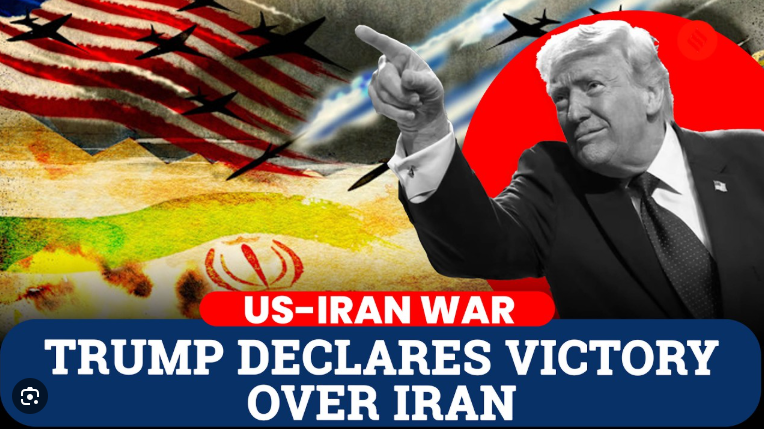
A few hours after attacking Iran on February 28, President Trump released a video informing us that massive and ongoing military combat operations were launched to eliminate imminent threats from the Iranian regime. He also said he wanted to end 47 years of Iran threatening world peace through countless attacks on other countries, including murder and terrorism. The mission entailed destroying Iran’s capacity to use military force, especially missiles and drones. As part of the coordinated action with Israel, the mission also included killing Iran’s Supreme Leader and many of its other leaders.
The Trump Administration insists it considered and prepared for all contingencies and risks.
Prior to launching the attacks, Trump and his officials insist they considered every contingency, assessed all the risks, and were prepared for every eventuality. To be specific:
- They knew the combat mission could go on for weeks or months, or even indefinitely, if necessary. Their working assessment was 4 to 6 six weeks, but they didn’t want to telegraph this information to Iran.
- They knew the cost of the operation would be substantial—many billions of dollars—given the scope of the operations they planned.
- They knew there was a likelihood of American casualties, including deaths and injuries.
- They knew that taking out current leaders and having a hand in establishing a new government would be risky, unpredictable, and complicated. Their plan called for the decapitation of Iranian leadership, for the Revolutionary Guard (armed forces) to lay down their weapons, and for the Iranian people to take control of their country.
- They knew innocent civilians might be killed or injured due to strikes by the US military.
- They knew the world’s oil supply would be disrupted if Iran prevented or hindered the movement of oil through the Strait of Hormuz. They knew this was a distinct possibility. They knew gasoline prices would go up in America and around the world; but they determined the disruption would be short-term.
- They knew Iran and its proxies could initiate terrorist activity in the US and other countries.
- They knew Iran might be assisted by other countries who could provide intelligence, economic assistance and weaponry. They knew Russia and China were two such countries.
As we enter the third week of the war, here’s an update on what Trump and his officials are telling us and what is actually happening.
1. The Administration is offering mixed messages regarding the reason or purpose for launching military operations.
Numerous mixed messages regarding the reason for war have been offered. Let’s focus on four of the most prominent reasons. Initially, Trump said the purpose was to address the imminent threat of a nuclear or other missile attack by Iran. Within a day (March 1) the Pentagon confirmed there was no sign Iran was going to attack the US first. A day or so later it was explained that because of Israel’s decision to attack Iran, the US would surely be attacked in retaliation. Thus, the US was compelled to join Israel in striking first. Within a day or so the White House discounted this reason. Third, Trump raised the purpose of regime change, noting the US would help establish a government and that he would have a hand in selecting or approving the new leader. He later lamented that most of the people they had in mind were killed in the first day of attacks. In the ensuing days, the White House again discounted or denied that regime change was the reason for war.
The fourth and most enduring reason for attacking Iran was to end 47 years of ongoing attacks, violence, and terrorism by Iran. The country remains defiant towards the US and was unwilling to give up its ambitions for a nuclear weapon. Believing that Iran wasn’t serious about a diplomatic solution, Trump attacked to wipe out Iran’s military capabilities, including the leaders. With complete and utter destruction of its military capabilities and all its leaders, the Administration anticipated the Revolutionary Guard would give up the fight. This conclusion was bolstered by the opinion that Iran was at its weakest point in years. The time was right to act. The Iranian people were likely to rejoice at the chance for new leadership and an end to oppression.
2. The Administration is also providing mixed messages regarding the status of the war.
Trump repeatedly says the mission is way ahead of schedule. He repeatedly says the US has won, but there is still more to do. He says all targets have been hit and destroyed. Iran’s capacity to launch missiles has been “obliterated” and its Navy has been destroyed. He has demanded that Iran unconditionally surrender. Finally, when asked about the war’s end, he said the conflict will end, “when I feel it in my bones.”
3. Contrary to Trump’s assertions that the war has been won and Iran totally incapacitated, the country has selected a new leader, the Revolutionary Guard continues to fight, and Iran has not surrendered.
Iran has chosen a new Supreme Leader who vows revenge on Israel and the US. He has refused to surrender and says Iran will continue to fight. The Revolutionary Guard continues to fight instead of laying down arms. The Iranian citizens have not launched any significant rebellion against the new leadership. Iran continues to block the Strait of Hormuz, knowing that this puts pressure on the US and the rest of the world. While its capacity to launch missiles is seriously degraded, Iran is still launching drones and hitting targets in the region. There is yet to be any intelligence that its stockpiles of enriched uranium have been destroyed.
4. The cost of the war—for just the first 6 days—was $11.3 billion, as acknowledged by the Pentagon; and, at day 12, the cost is $16.5 billion.
According to one expert (Kent Smetters, with the Penn Wharton Budget Model), a two-month war could cost $40 to $95 billion.
5. As of March 13, 2026, 13 American soldiers have lost their lives, and over 140 have been injured.
6. The war has resulted in significant and tragic civilian casualties.
An American missile mistakenly hit a school on the first day of attacks (February 28). There were 170 casualties, mostly young schoolgirls. Time Magazine reports total civilian casualties from US and Israel attacks are over 1,000.
7. Using mines, drones, short-range missiles and other strategies, Iran continues to disrupt the world’s oil supply in the Strait of Hormuz.
In just two weeks, average price of regular gas in the US has gone from $2.94 to $3.68, an increase of 74 cents per gallon. Worldwide prices for oil and gas have not yet been significantly affected by the decision to tap worldwide (400 million barrels) and US (172 million barrels) petroleum reserves. Until the Strait of Hormuz is open, worldwide prices for oil and gas will continue to remain high, and are likely to increase.
The world supply of fertilizer has also been disrupted, threatening what farmers describe as “food supply shocks.”
8. Trump’s insistence that gas prices will come down quickly once the Strait is open is not borne out by history.
Analysis by FRED (Federal Reserve of St. Louis) shows that gas prices tend to rise quickly and come down slowly, a phenomenon known as “rockets and feathers.” This was clearly the case for the gas price surge in the spring and summer of 2022, in connection with Russia’s invasion of Ukraine. Gas prices went up 58 cents per gallon in ten days ($3.62 per gallon on February 21, versus $4.20 per gallon on March 1). And, over the next few months prices went up another 86 cents a gallon to peak at $5.06 per gallon on June 20, 2022. It took a full five months, until November 28, 2022, for gas prices to return to $3.65 per gallon.
9. Terrorist activity by Iran and its proxies is being investigated in the US and other countries.
Two recent terrorist attacks in the US are being investigated for a nexus to the Iran war.
10. Russia and China condemned the US attack and the killing of Iran’s Supreme Leader, and Russia is providing Iran with intelligence regard US military targets.
More recently, the Trump Administration eased sanctions on Russian oil, allowing it to be sold to other countries for a limited duration. This allows Russia to replenish its war chest in its ongoing attack on Ukraine, a move protested by our European allies and many members of Congress.
Trump’s war with Iran has troubling implications.
Given what has happened in the first two weeks of the war with Iran, there are at least three very troublesome implications of Trump’s war with Iran
First, it’s increasingly clear that the President initiated massive and ongoing military combat operations in the absence of an imminent threat to the United States. It’s perfectly understandable that the US might want to use military force to degrade Iran’s ability to strike its neighbors and US operations in the region. It’s also understandable that the US could be frustrated with Iran’s unwillingness to negotiate a diplomatic solution. It’s also understandable that the US could be frustrated with Iran’s long history of aggression towards the county. However, none of these reasons rise to the level of an imminent threat to the US. There was no intelligence that Iran was about to attack the United States or our military bases in the region. There was no intelligence it was just weeks away from having a nuclear weapon.
The President unleashed a massive and ongoing use of military force that is tantamount to war. Instead of acting unilaterally, the President should have conferred with Congress beforehand. The War Powers Resolution requires consultation “in every possible instance” . . .to insure “the collective judgement of both the Congress and the President.”
Second, it’s increasingly clear the Administration miscalculated the situation in Iran. Its plan was to first totally and completely destroy Iran’s ability to fight. At the same time, we would wipe all Iran’s leadership, leaving no one to make decisions. With the situation utterly hopeless, the Administration calculated that the Revolutionary Guard would be inclined to give up the fight, particularly if we offered immunity. Given the significant degree of citizen unrest in Iran, the Administration calculated the US attack would be welcomed. The US could help establish a new government that would be friendly towards America and other countries in the Middle East.
While it’s clear that the US attacks seriously damaged or destroyed Iran’s ability to fight, we have not destroyed Iran’s will to fight. While we decapitated Iran’s leadership, the country is still making decisions. The Revolutionary Guard continues to fight, albeit with limited means. And, apparently, short-range missiles, drones, and mines are enough to shut down the Strait of Hormuz.
Third, the Trump Administration has a serious and increasing credibility problem regarding its prosecution of the war. Just nine months ago, in June of 2025, Trump told Americans that he completely obliterated Iran’s nuclear program and capacity. Now he tells us there’s an imminent threat of Iran having nuclear weapons and attacking the US. But the Pentagon tells us otherwise. He tells us the war has been won and Iran’s capacity to fight has been destroyed. Yet Iran still launches missiles and drones. Also, Iran continues to be able to restrict shipping in the Strait of Hormuz. He tells us the war will be over very soon; yet in the same breath says it could go on indefinitely. He tells us gasoline prices will come down very rapidly, but history says otherwise.
What’s next?
I see two possibilities in terms of Trump’s war with Iran. First, any day now he will halt military operations and say the war has been won and is a complete and total victory. Iran’s capacity to strike other countries and inflict damage has been totally degraded. He will halt US military operations even though Iran won’t have unconditionally surrendered and continues with modest strikes and snarls traffic in the Strait of Hormuz. He’ll say other countries should take the lead with the Strait, as the US has already done its part. He’ll be banking on Iran easing up on the Strait if the US ceases hostilities in Iran. In short, Trump will declare total victory and walk away.
The second possibility is that Trump will continue to prosecute the war. This becomes dangerous because it could well take boots on the ground to open up the Strait of Hormuz. Iran retains the will to fight, meaning the Revolutionary Guard must be defeated. While it has suffered some 6,000 casualties (and many in high-ranking positions), it still has a total force of around 200,000. This is a conflict that could go on indefinitely, cost billions more, and result in many more American casualties.
I am virtually 100% certain Trump will choose to declare victory and walk away. With the upcoming mid-term elections in November, Trump and Republicans don’t want to be entangled in a war that is unpopular with the American people. They want gas prices back to normal. They don’t want any additional American casualties. They don’t want to have to defend tens of billions more in military spending. They’ll campaign on making America and the world safer by demolishing Iran’s ability to fight and inflict pain around the globe. They’ll call it a huge success.
In the big picture, both of the above possibilities are terrible. It was wrong for the Trump Administration to unilaterally initiate massive and ongoing military operations in the absence of a clear and imminent threat to the United States. Working with Congress assures that the necessity of going to war has broad-based support, and that the objectives are well thought out and agreed upon. In my view, Congress might have convinced the Trump Administration that Iran would keep on fighting despite massive degradation of its military capacity and the decapitation of its leadership. This is why the Constitution doesn’t put the decision to go to war in the hands of one person.
Leave a Reply